
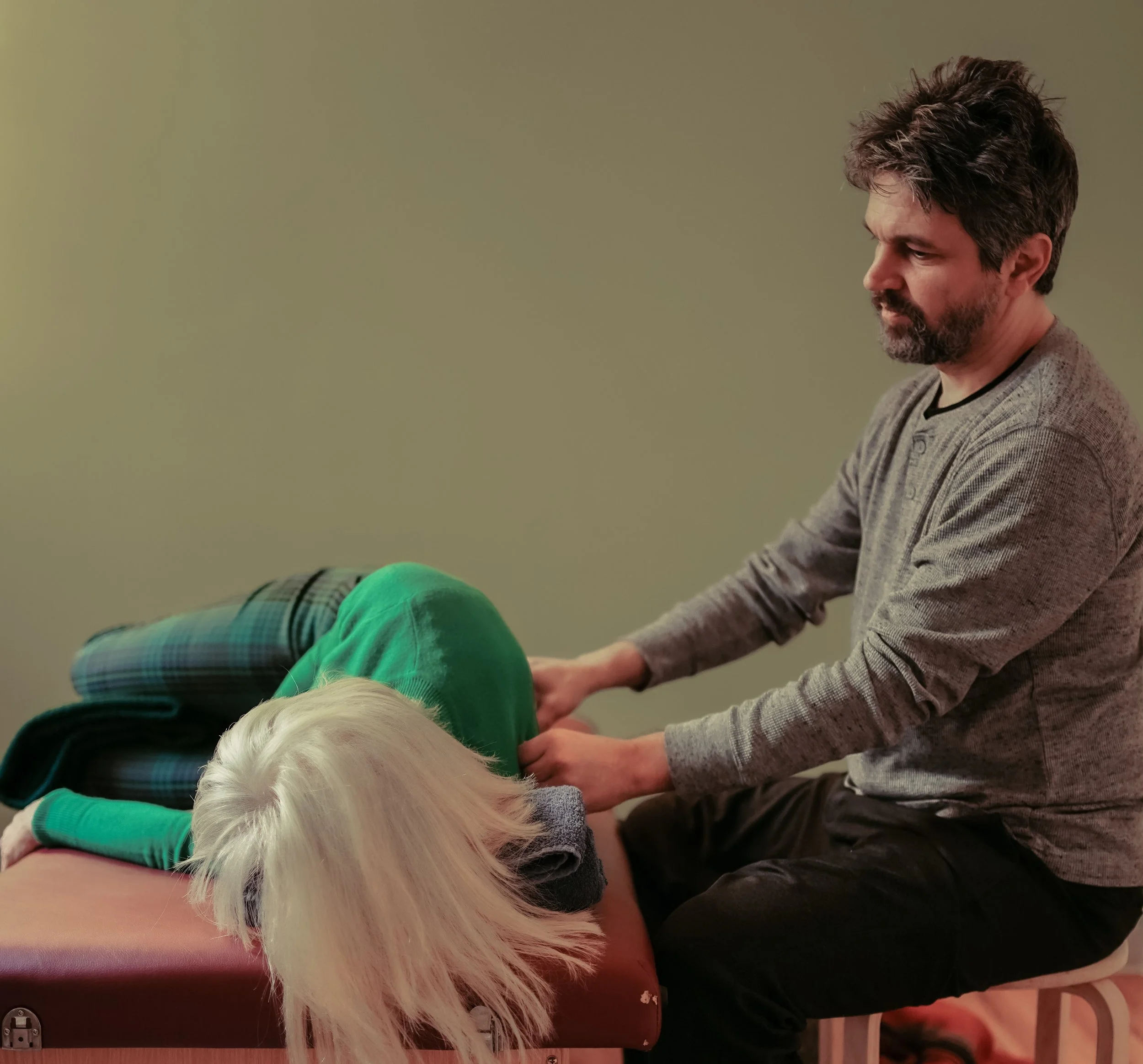
Supporting Therapy Clients through Feldenkrais
“Nothing is more revealing than movement. The body says what words cannot.”
— Martha Graham
We respond and adapt to life’s experiences both physically and emotionally, separating the two is only possible if we think abstractly. As we move through life we use our senses, feel many emotions, think about what we need from the grocery store, revisit memories, or dream about possibilities. It is impossible to isolate thoughts from physical experience. It is extremely important to foster the connection between the mind and the body, ultimately leading to a better quality of life. By using movement to connect to our minds it can be an extremely powerful tool to work in tandem with traditional therapy.
We can’t force a person to be aware of every little thing our bodies experience during the day, but with a little guidance, this awareness can be increased and nurtured.
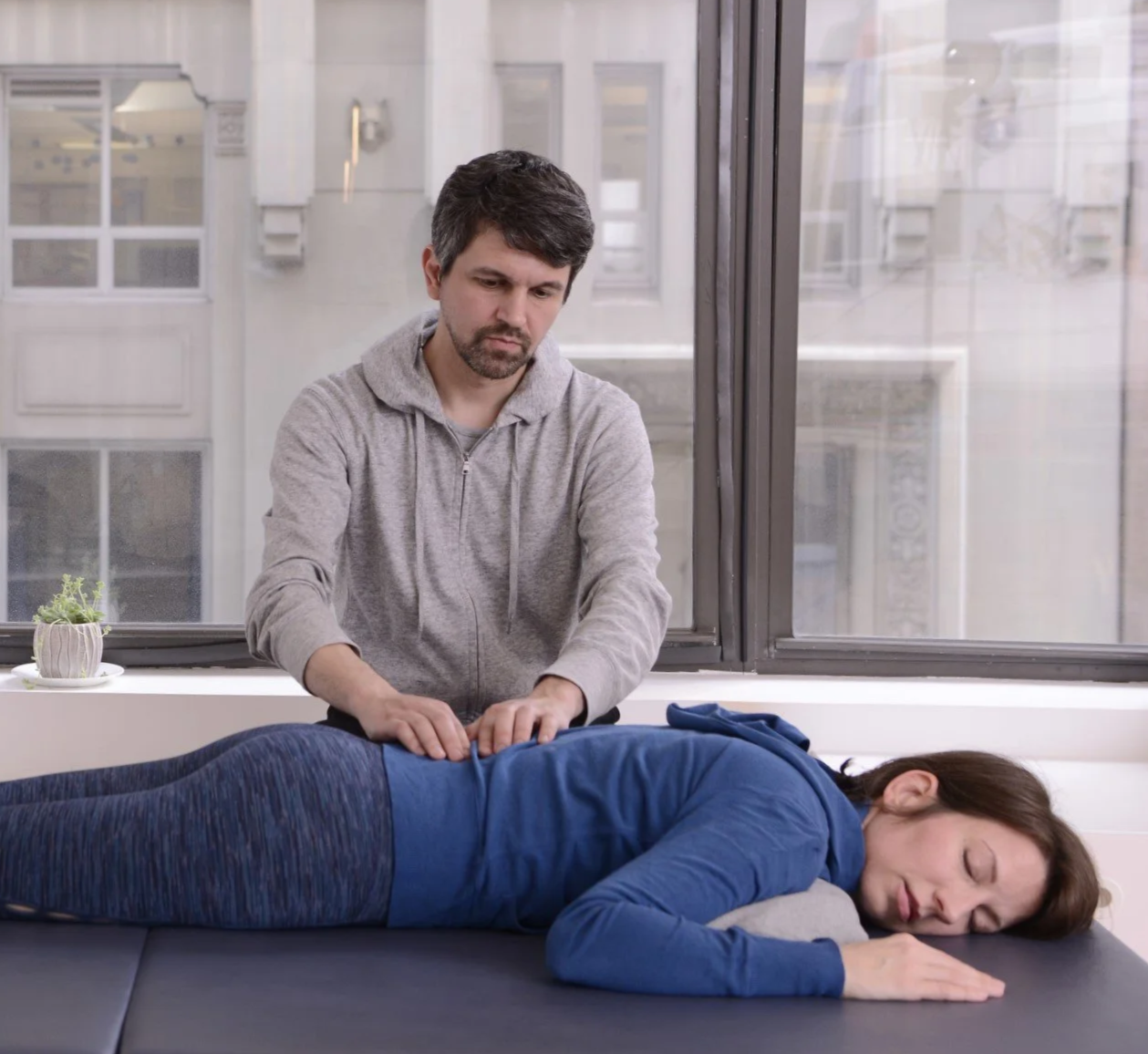
The Feldenkrais Method provides a practical framework for engaging the relationship between the mind-body to support emotional and physical well-being.
Experiencing a Feldenkrais session can feel healing and restorative and will help a person be more in touch with how they feel in daily life and during a traditional therapy session.
The beauty of the process is that it does not require any special physical skills and the person does not need to share their thoughts and feelings with the Feldenkrais practitioner. The practitioner provides support by gently helping the client to amplify awareness of the physical dimension of their experience - how they move, how they make contact with the floor, what is the timing, speed, or the amount of effort.
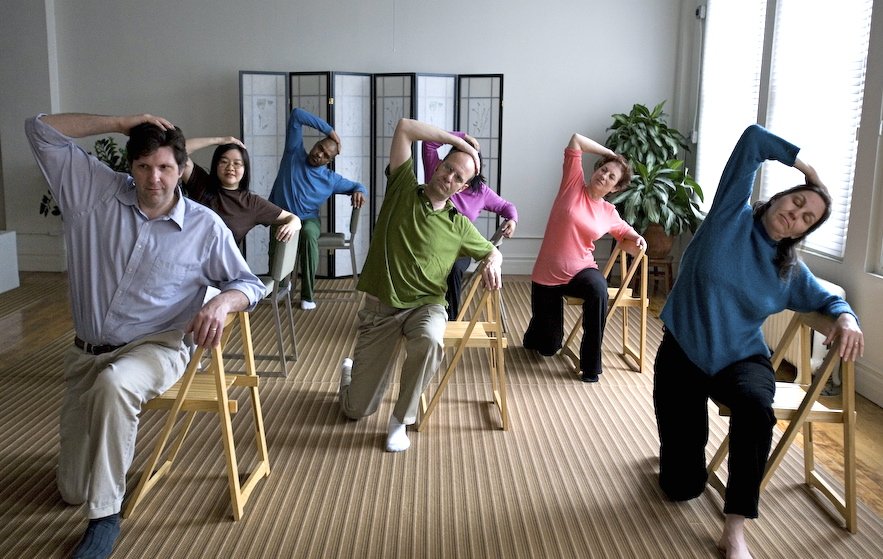
Shifts in the quality of one’s emotional state mirrors the shift in their physicality.
After a Feldenkrais session people generally feel more grounded, more at ease to direct their attention, they might have sudden insights into the things they’ve been puzzled or haunted by. This latter shift is more individual and can remain private - the client is never pressured to share this information with the practitioner or group if they are in a group class. Their inner discoveries and questions can remain their own (or shared later as needed with close friends or their therapist).
Shifts in the physical state during Feldenkrais class or private session emerge naturally. Parallel discoveries and shifts in psychological state also tend to emerge gently and are less likely to trigger trauma.
“Igor Shteynberg’s Feldenkrais movement and somatic healing practice stands out from other NYC somatic practitioners. He illuminates how your conscious and unconscious movement habits mirror the larger movements in your life. His gentle pacing, thoughtfulness, care, and intuitive listening and touch supports you to tune into what is happening in your body. Igor will help you to uncover deep insights that support your growth, self development and overall well-being.”
— Nita Baum, Cultural Creative Entrepreneur
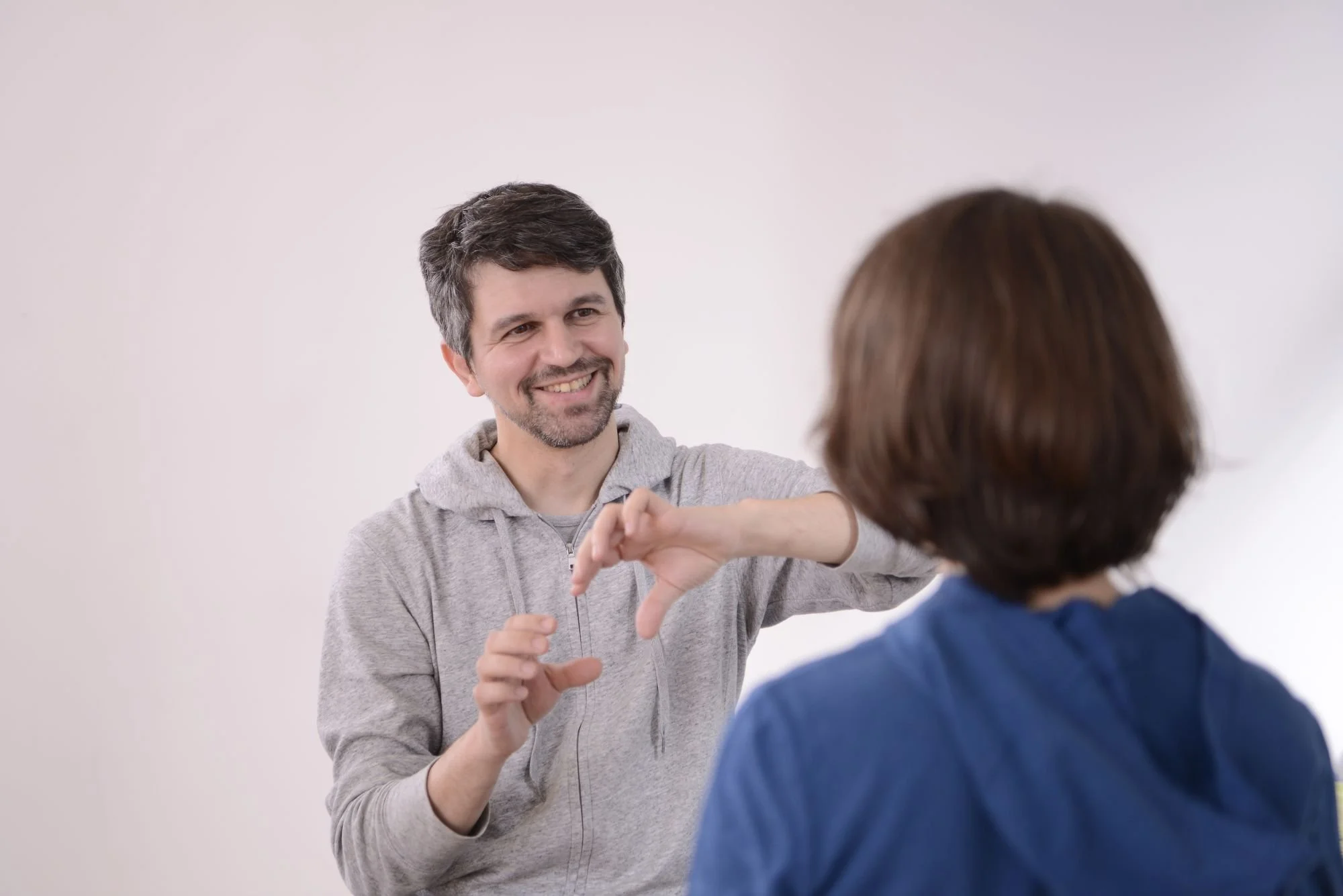
What Feldenkrais Can Do For Your Therapy Clients
Just like therapy, Feldenkrais works by increasing awareness which results in transformative change from the inside.
Clients can have a healing experience without analysis or interpretation.
Healing does not stop once the session is over. Clients continue to learn from their own discoveries whether they continue practicing Feldenkrais or not. And if they wish, they can practice on their own, to support and accelerate their healing process as they see fit.
You can feel the benefits even after one session and decide if it's worth continuing, because the format is supportive and not forceful. The progress is incremental and lasting.
What kind of therapy clients can benefit from?
People who are “allergic” to more structured practices - they don’t like the rigidity of “do as I say” teaching format, yet they want to connect better with their body.
People who have trouble relaxing and continue holding tension in their body
Highly sensitive of neurodivergent people
People who want to be in charge of their own healing (a combination of hands on and guided movement, or perhaps guided movement only allows the person to be more in charge and not surrender their agency)
The Benefits
“This type of experience can support and motivate therapy clients in their quest to transform their lives for the better and motivate them to go deeper and wait patiently for emergent change, steering them away from being tempted to fix themselves or deem themselves hopeless and doomed.”
- Igor
The goal of the method is to create an environment, where a person can gradually shift towards a “better” state of mind and body that is natural to them. Nothing is forced upon them physically or emotionally, or being taken away by force or coercion allowing the mind to be at ease. There's nothing to analyze or memorize, nothing to notice or hold onto. At the end of the session they feel as if they woke up from a restful nap (most of the time people don’t fall asleep, but shift to a pleasant relaxed state that is between asleep and awake). During that time a person can relax and take a break from being in charge, while the nervous system is actively learning and making changes. The feeling of comfort that emerges can stay with a person even if they don’t remember what happened during the session.
Feldenkrais as I see it is a healing practice that brings qualitative improvement and minimizes risk of harm. The goal is incremental improvement in the quality of movement at one’s own pace. If you take a break or stop practicing, what you've learned is yours to keep. The things you learn with Feldenkrais are things you use every day. One time during a private session client told me, “Nothing hurts today, maybe it’s a bad day for a session.” The honest answer is: if you want to feel better, any day is a good day. I don’t have to look for problems to fix in order to help you feel better.
Common Questions From Therapists:
-
As a Feldenkrais practitioner I strive to create a safe space for natural, unforced change. This does not trigger old trauma or activate defence mechanisms. When a client attends a session I am not attempting to “fix” them, or analyze their movements to point out what they can do better. These imposing and corrective adjustments are not tempting, because I know from my own experience that corrective feedback can feel judgemental and the change it brings (if any) does not last, which can lead the client to feel defeated and unmotivated.
Instead I look to gently connect with the person’s movement (through touch in a private session, or by simply observing in an appreciative non-judgemental way in a group class). I tune into how they organize themselves for movement: what is the timing, what is the quality and where can I offer feedback through touch about what works well, or direct their attention to movement properties that they can appreciate.
Conducting classes and private sessions in this way relieves the person from the burden to perform, to meet anyone's expectations (even their own). It allows them to be free to be themselves. They can focus on how their movement feels to them without expecting corrective or approving feedback from somebody else. It allows them to let go of their previous notions about what is the right way to move, and instead rediscover it through their own experience.
-
“Trust but verify” - Russian proverb
“I am willing for the participant to commit or not commit himself to the group. If a person wishes to remain psychologically on the sidelines, he has my implicit permission to do so. The group itself may or may not be willing for him to remain in this stance but personally I am willing..”
-Carl Rogers - on encounter groups
Imagine a waterfall. Picture the water as it falls down the hill, yielding to gravity, following the path of least resistance. Your Nervous System adapts in the same way. It does not care about preconceived notions and does not require conscious nudging to change. If change is possible it will happen, and believing it will happen is not critical ahead of time. Gravity does not care if you believe in it or not, it still will work the same way. If a person is open to the possibility of change that is enough.
When my students enter a private session, or a group class, they don’t need to believe in the outcome. They can be skeptical, they can question everything. It’s important that I don’t force them to give up their assumptions and beliefs without a good reason. Being open to the process might just be the thing that sets them on the path to healing.
-
Feldenkrais is based on "Form follows function" - if you improve how you move(function) then the form (shape of your body, aka posture) improves with it.
Yoga is based on "Function follows form" - if you change the shape of the body to the correct one as demonstrated by the teacher/book your function will improve.
Feldenkrais works with movement to help you become aware of the function, because this process happens unconsciously, it naturally improves. Yoga, on the other hand, works consciously. By tweaking static positions in real time it requires more focus and more repetition, making it harder to relax your mind.
Yoga focuses on external image - instructor demonstrates and students imitate. There is an implied trust that the teacher knows better. The postures that are practiced are not very comfortable for many beginners and risk for injury is relatively high despite instructors encouraging students to take it easy and not push themselves too far (it’s hard to gauge when you’ve gone too far when you are not familiar with the posture). There also might be pressure to “perform well” or to copy the instructor exactly.
In a Feldenkrais class movement begins from a restful and comfortable position (for example lying on your back or on your side). This makes it possible to initiate movement with more gradation and start and stop at any point movement feels not easy.
In a private Feldenkrais session practitioner gently initiates movement to help the client become more aware of how they move. This allows the client to fully immerse themselves into a relaxed state without having to consciously focus on the process.
-
From Hopeless to Hopeful - Many beliefs like “no pain no gain” or negatively comparing ourselves to others in better physical shape are so ingrained in our culture and our thoughts that we often feel inadequate. We might have thoughts such as “I can’t go to the gym or do yoga 5 days a week.” Instead of acting on our desires to feel better, we often feel like we are standing at the bottom of a mountain that is too hard to climb.
Feldenkrais can help you learn to believe that you can feel better without feeling that you need to achieve the impossible. In Feldenkrais class is an opportunity to check in with yourself by gently exploring your movement in a way that helps you be more in tune with how your body moves naturally, and appreciate what works. Without trying to “correct” or “fix” you don’t have to push yourself to the limit or feel like you’re struggling. During a class your brain will use neuroplasticity to make lasting change without you having to imagine it in advance. Just explore and allow yourself to be in the present moment and your nervous system will do the work.
-
The Feldenkrais Method does not claim to resolve symptoms of anxiety, depression, or any other mental health conditions on its own. Rather, it can work in tandem with traditional therapy to help clients throughout the healing process. Strong emotions can often be presented physically in our bodies. Taking the initiative to take care of our mental health along with taking care of our bodies can only help us in our healing journey. Clients will always be in a safe environment and will never be asked to open up about their mental struggles.
Schedule a free consultation to learn how this work can benefit you or your clients.
Experience the benefits first hand of a guided movement experience.